
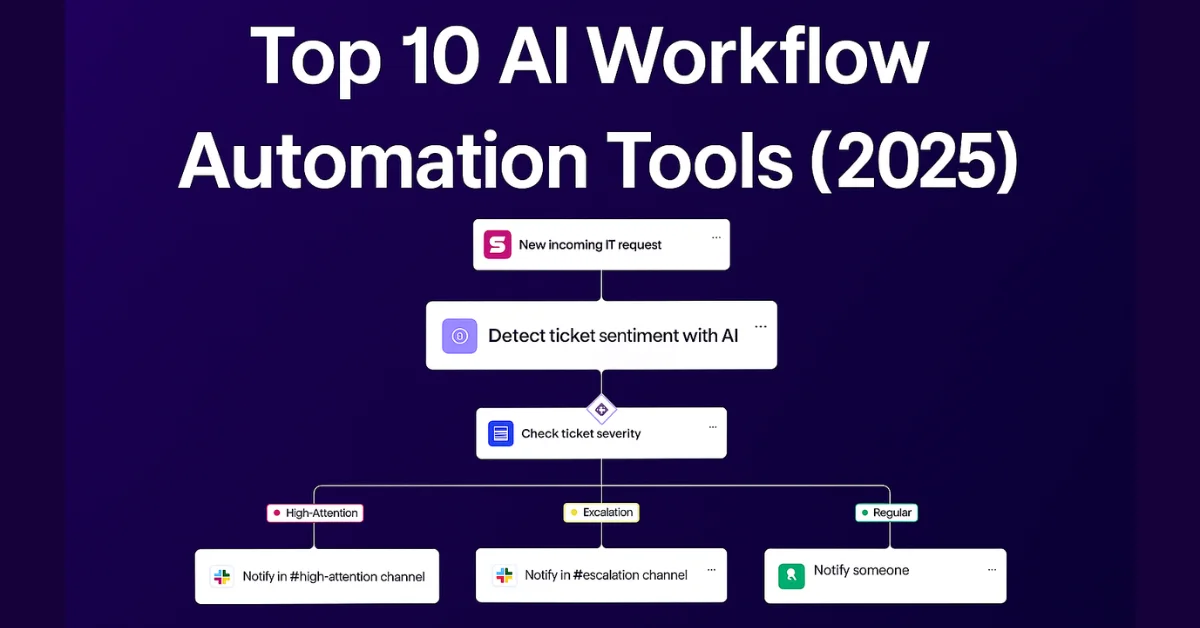
Increasingly, businesses are adopting AI-powered automation to enhance efficiency and operational performance in 2025. Marketing teams and businesses use AI-enabled workflow platforms to automate repetitive tasks and integrate disconnected systems.
The global market for workflow automation is predicted to hit $23.77 billion by the end of 2025, and AI tools are becoming more popular than ever. In fact, 75% of businesses see automation as a way to stay ahead of the competition.
Businesses are relying on AI workflow automation tools to reduce manual tasks, control costs, and streamline decision-making across departments. AI workflow automation tools can condense an entire day’s work into just a few minutes, boosting productivity like never before.
This article presents a comprehensive list of the top 10 AI workflow automation tools available in 2025. You’ll also find out what actually AI workflow is, the benefits, and how AI automation tools are transforming businesses.
At Hassanable, I drop new AI blogs related to AI tools and tips, and how you can utilize AI to grow your business every week. Stay connected!
What are AI Workflow Automation Tools?
AI Workflow Automation Tools are smart software platforms that help businesses complete everyday tasks automatically, without needing constant human input.
They use artificial intelligence to handle repetitive, time-consuming jobs like sending emails, sorting data, updating records, and more.
These tools build AI-driven systems to make work faster, smoother, and more accurate. Instead of doing the same task over and over, businesses can rely on AI to take care of it in the background.
How Do They Work?
AI workflow automation tools rely on advanced technologies like:
- Machine Learning (ML): This helps the tool learn from data and improve over time. For example, it can predict the next steps in a task based on past actions.
- Natural Language Processing (NLP): This allows the tool to understand and respond to human language, whether it’s analyzing emails, chats, or documents.
- Integration Capabilities: These tools can connect with different apps (like CRMs, email platforms, or spreadsheets), bringing everything into one smooth AI workflow.
- Rule-Based Logic: You can set up “if this, then that” rules to tell the AI tool exactly how to act in different situations.
In short, AI workflow automation tools act like a smart assistant that takes over repetitive tasks, learns as it works, and helps teams stay focused on more important things.
Recent data shows that 91% of organizations have experienced better visibility into their operations after adopting automation. This improved clarity helps them make quicker decisions and reduces delays.
The 10 best AI Workflow Automation Tools
Below is a comparison table of the AI workflow automation tools that are among the most highly rated and widely adopted in mid-2025.
Comparison of Key Features and Ratings
| Tool | G2 Rating | Core Use Cases / AI Features | Key Integrations | Pricing |
| Zapier | 4.5/5 | No-code Zaps (multi-step workflows), now with AI/Zap creation from prompts | Slack, Salesforce, Google Workspace, HubSpot, +ChatGPT/Claude support | Free plan; paid from ~$29.99/mo (Professional) |
| Make | 4.7/5 | Visual workflow builder, complex logic, AI modules (text gen, parsing) | Slack, HubSpot, Gmail, + OpenAI/ChatGPT, Anthropic Claude | Free plan; paid from ~$9/user/mo (billed annually) |
| Power Automate | 4.4/5 | Cloud flows & RPA for M365 and beyond; AI Builder (form/sentiment), Copilot flows | Teams, SharePoint, Outlook, Dynamics 365, Salesforce, +ChatGPT (via plugin) | Free trial; Premium ~$15/user/mo; unattended bots ~$150–$215/bot/mo |
| n8n | 4.8/5 | Open-source node-based automation; full JavaScript/pods; AI nodes (ChatGPT, Claude) | Slack, Salesforce (via API), Mailchimp, +OpenAI/ChatGPT, Anthropic Claude | Free self-host; Cloud from ~$20/user/mo (annually) |
| Workato | 4.7/5 | Enterprise iPaaS: no-code recipes, multi-step workflows, enterprise security | Slack, Salesforce, Workday, NetSuite, etc. | Plans from ~$10K/year (custom quotes) |
| UiPath | 4.6/5 | RPA + AI: drag-drop bots & new AI Agents; Automation Hub; Task/RPA; integrations to any app | Salesforce, ServiceNow, SAP, Slack, Teams; OpenAI/ChatGPT, Google Vertex AI | Free Community; Enterprise packages (Studio/Attended Bot seats ~$420/mo) |
| Automation Anywhere | 4.5/5 | Cloud RPA platform (A360) with IQ Bots (cognitive OCR), Process Discovery, analytics | Salesforce, SAP, ServiceNow, Oracle, Azure, Google; possible Slack via webhook | Enterprise licensing (contact vendor); free trial/demo |
| monday.com | 4.7/5 | Work/project management with automations; AI Blocks (text summarization, translation, sentiment) | Slack, Salesforce, Google Workspace, Teams, etc. | Free tier; Basic from ~$9/user/mo |
| Tray.ai | 4.5/5 | AI-ready iPaaS + Agent Builder (“Merlin”) for goal-based bots; high-scale automations | Slack, Salesforce, Zendesk, HubSpot, etc. (also supports API AI calls) | Usage-based (“Pro/Team/Enterprise” plans, contact for pricing) |
| Lindy.ai | 4.9/5 | No-code AI “agents” for tasks (email, scheduling, CRM); agent swarms; custom workflows | Slack (for approvals/notifications), email, calendars, 200+ others via Pipedream | Free (400 tasks/mo); Pro $49.99/mo; Business $299.99/mo |
Now, let’s go through each AI workflow automation tool in detail.
Comprehensive Overview of Top 10 AI Workflow Automation Tools
1. Zapier
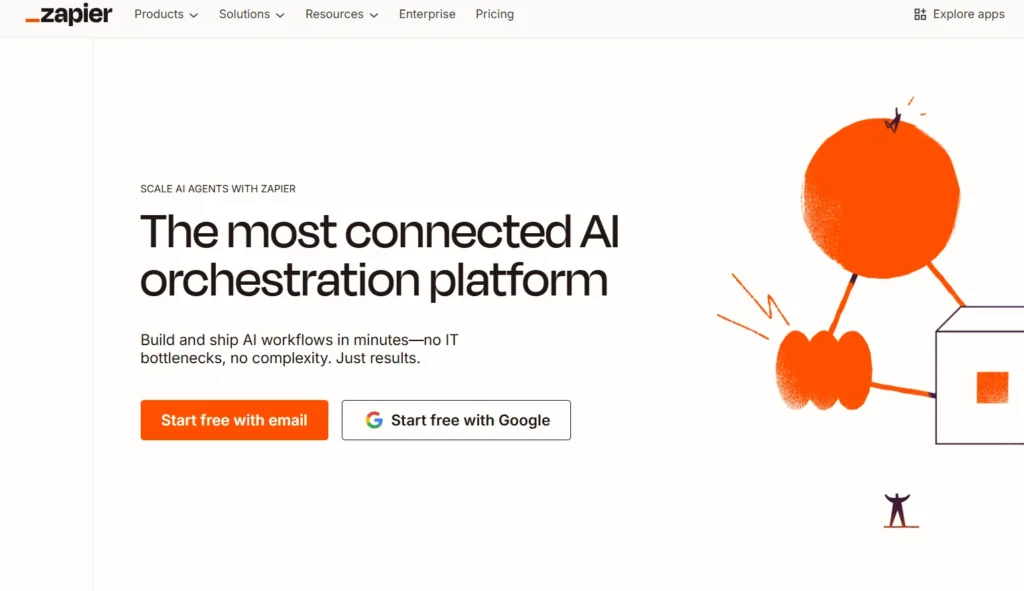
Zapier stands out as one of the most popular AI workflow automation tools, trusted by over 2 million businesses worldwide. This no-code automation platform allows users to build “Zaps” that seamlessly move data between 7,000+ apps without any coding knowledge. Moreover, recent AI enhancements enable users to create automated workflows from simple natural-language prompts, making process automation more accessible than ever.
Key Features
- Multi-step workflows with conditional logic and advanced data formatting capabilities
- AI-powered steps that integrate directly with OpenAI/ChatGPT and Claude APIs
- Extensive app library with native connectors to popular platforms like Slack and Salesforce
- No-code automation builder that supports complex business processes
- Advanced AI integrations for automated email drafting and content summarization
Ratings
Zapier maintains impressive ratings with a G2 score of approximately 4.5/5 based on over 1,364 reviews. Additionally, users consistently praise its vast app library and simplicity across multiple review platforms.
Pricing
The platform offers a free tier with limited automations, while paid plans start at $29.99/month for the Professional tier. Furthermore, enterprise plans with custom pricing support higher volume requirements and SSO integration.
Also Read: 10 Ways to Automate Your Workflows using AI Tools
2. Make
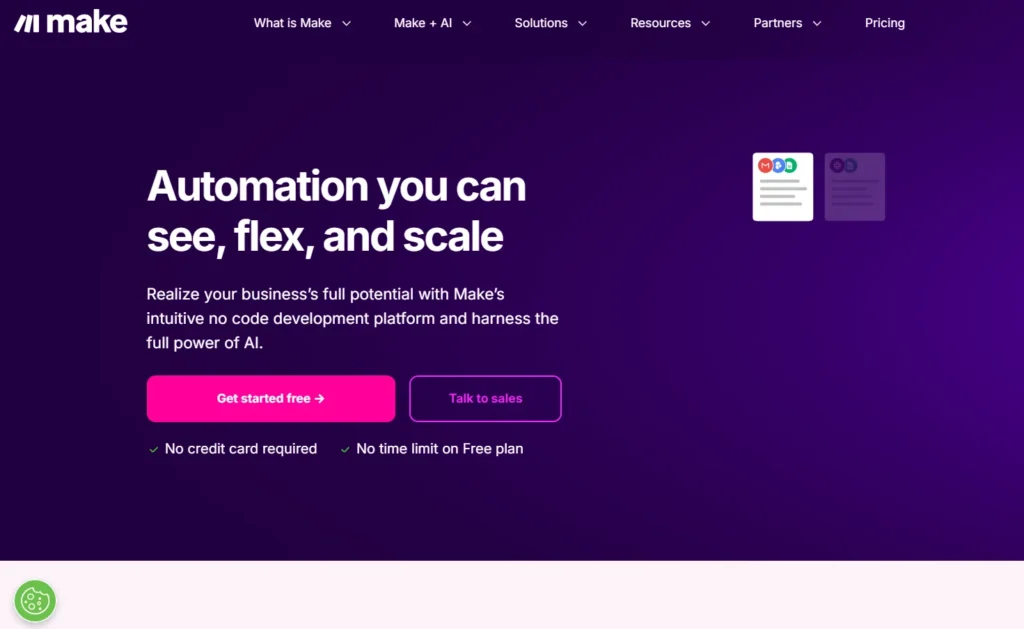
Make represents a powerful visual automation platform that excels in creating sophisticated AI-driven processes through its intuitive drag-and-drop interface. Make is one of a kind among other AI workflow automation tools and offers advanced data transformation capabilities. Recently, it introduced built-in AI modules for text generation and classification. Additionally, marketing teams leverage Make to streamline email campaigns, lead imports, and content workflows with remarkable efficiency.
Key Features
- Visual drag-and-drop workflow builder with routing and filtering capabilities
- Built-in AI modules for text generation, extraction, and data classification
- 2,000+ pre-built app connectors, including dedicated OpenAI and Claude modules
- Advanced data transformations for JSON and XML handling
- Comprehensive automation builder supporting complex business logic
Ratings
Make boasts an excellent G2 rating of 4.7/5 based on 239 reviews from satisfied users. Moreover, reviewers consistently highlight its flexibility and visual ease as standout features.
Pricing
The platform provides a free plan with 1,000 operations per month and unlimited users. However, paid plans begin at $9 per user per month when billed annually for increased throughput.
3. Microsoft Power Automate
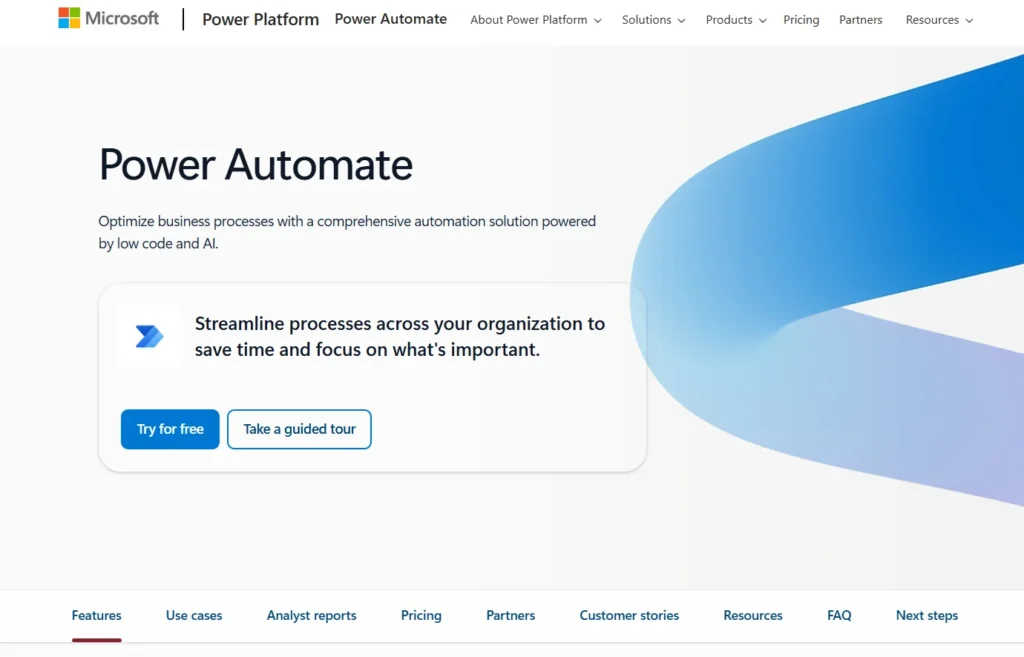
Microsoft Power Automate serves as a comprehensive cloud and desktop workflow platform within the Microsoft Power Platform ecosystem. This robust solution automates processes across Microsoft 365 applications and hundreds of external apps through advanced AI-powered workflows. Furthermore, the new Power Automate Plugin for ChatGPT allows users to create and run flows directly from natural language prompts, revolutionizing simple task automation. Definitely lands amidst the top AI workflow automation tools in this age.
Key Features
- Deep integration with Microsoft 365 ecosystem, including Teams, SharePoint, and Outlook
- AI Builder models for form processing, sentiment analysis, and cognitive services
- Attended and unattended robotic process automation (RPA) capabilities
- Official ChatGPT plugin for creating flows from natural-language prompts
- Low-code flow designer with extensive prebuilt templates
Ratings
Power Automate maintains a solid G2 rating of approximately 4.4/5 based on 677 user reviews. In addition, users particularly appreciate the tight Microsoft ecosystem integration and comprehensive template library.
Pricing
The platform offers a free 30-day trial, with per-user plans starting at $15/month including premium connectors. Additionally, enterprise licensing is available through Power Platform plans with various pricing tiers.
4. n8n
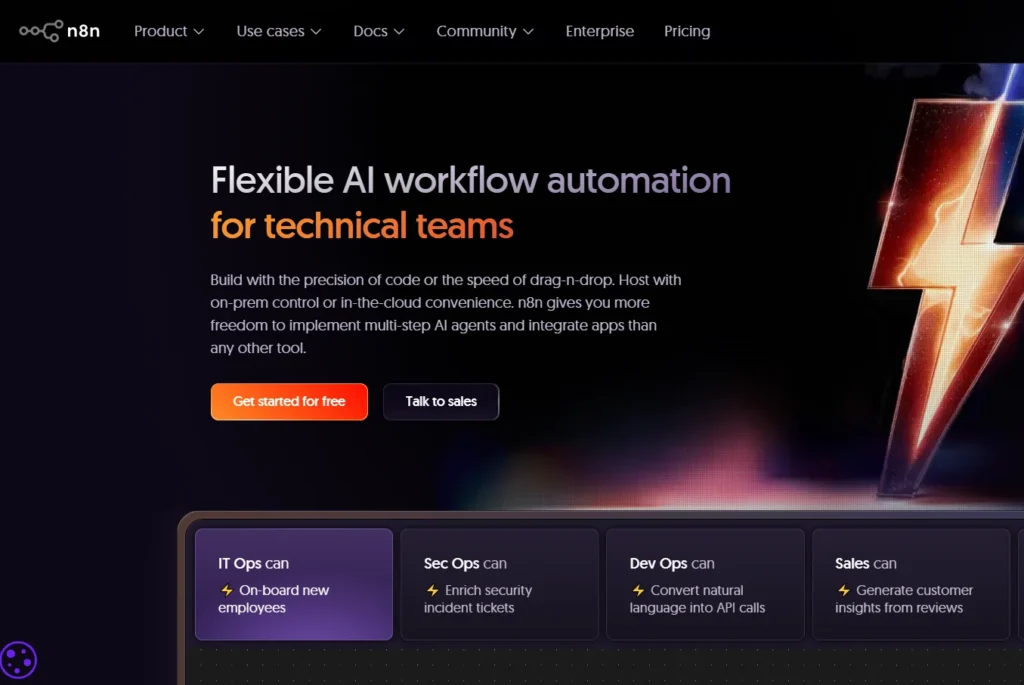
n8n is highly praised among AI enthusiasts and deservedly made into the list of top AI workflow automation tools. It distinguishes itself as an open-source workflow automation tool specifically designed for developers and technically savvy teams seeking maximum flexibility. This innovative platform provides a node-based editor with full source code access and self-hosting capabilities. Moreover, it explicitly supports AI-powered agents through first-class nodes for OpenAI ChatGPT and Anthropic Claude, making it ideal for creating advanced AI-powered workflows.
Key Features
- Open-source architecture with complete source code access and self-hosting options
- Node-based editor supporting complex logic and HTTP requests/webhooks
- 350+ community-driven integrations with continuous expansion
- First-class OpenAI and Claude nodes for seamless AI integrations
- Advanced automation builder designed for technical users and custom ETL processes
Ratings
n8n achieves an impressive G2 rating of 4.8/5 from users who value its power and flexibility. Furthermore, users consistently praise its self-hosting capabilities and robust LangChain support.
Pricing
The core product remains completely free for self-hosting, while cloud-hosted plans start at $20/user/month. Additionally, a free-tier cloud plan with limited executions is available for smaller teams.
5. Workato
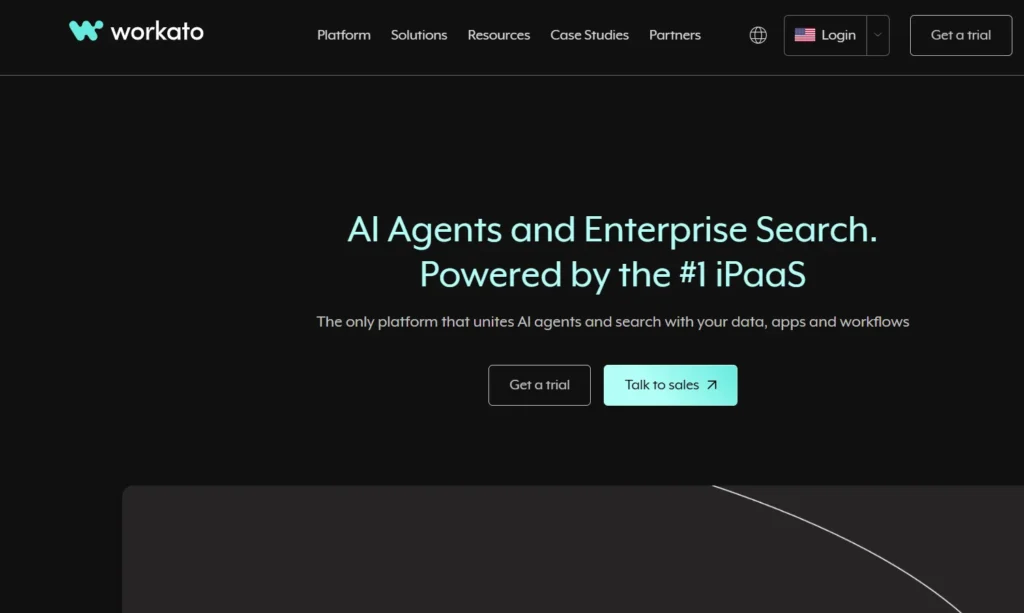
Workato positions itself as an enterprise-grade integration and automation platform focusing on cross-departmental AI-driven processes. Whenever we talk about AI workflow automation tools, Workato is always part of the discussion. It connects over 1,000 apps through its no-code “recipes” approach. Additionally, marketers utilize Workato to integrate marketing automation platforms like Marketo and HubSpot with CRM systems and advertising platforms seamlessly.
Key Features
- Enterprise-grade security and compliance, including SOC 2, HIPAA, and GDPR certifications
- Reusable pre-built “recipes” serving as templates for common business processes
- Advanced data mapping capabilities with conditional logic for complex workflows
- Cross-departmental process automation spanning sales, marketing, HR, and finance
- Comprehensive connector library supporting major business applications
Ratings
Workato maintains an excellent G2 rating of 4.7/5 based on 564 comprehensive user reviews. Moreover, users consistently highlight its scalability and ease of use for managing complex automation flows.
Pricing
Enterprise pricing typically starts around $10,000 annually for small teams, with custom pricing available. Furthermore, enterprise plans include premium support and advanced features for larger deployments.
6. UiPath
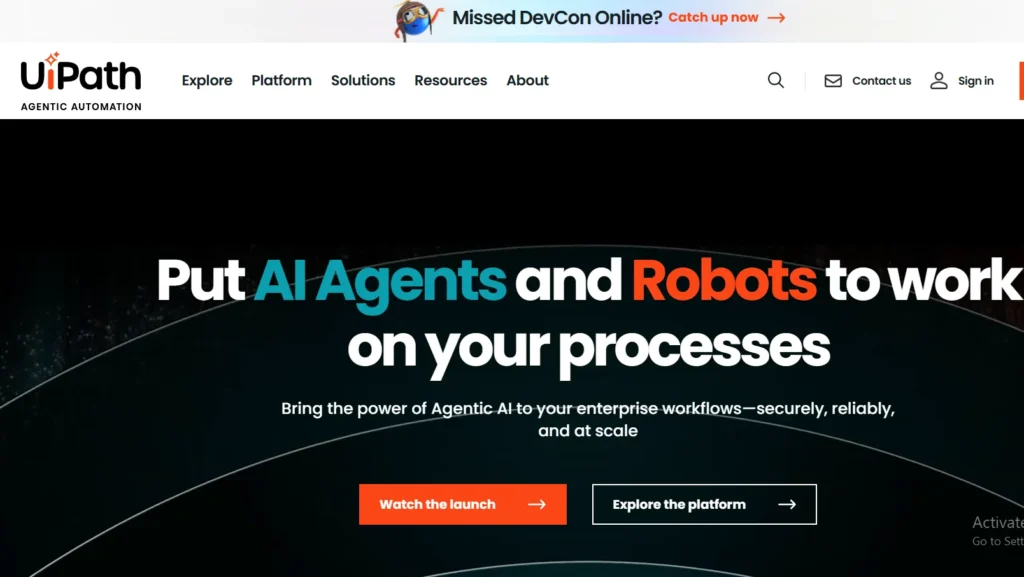
UiPath leads the robotic process automation (RPA) space and has evolved into a comprehensive AI-driven automation suite featuring “Agentic Process Automation.” This advanced platform enables organizations to build sophisticated robots that can mimic user actions or work toward high-level goals autonomously. Additionally, UiPath seamlessly integrates with streamline AI systems, including OpenAI ChatGPT and Google Vertex AI, for enhanced automation capabilities. When it comes to RPA, UiPath leads the way in AI workflow automation tools.
Key Features
- Comprehensive RPA platform with attended and unattended automation capabilities
- AI Agents that can reason and work toward high-level business objectives
- Automation Hub for ideation, prioritization, and process discovery
- Advanced AI integrations, including OpenAI ChatGPT and Google Vertex AI
- Enterprise-grade orchestration and analytics through comprehensive dashboards
Ratings
UiPath achieves a strong G2 rating of 4.6/5 based on over 7,161 user reviews across multiple categories. However, users note that while the platform offers rich features and scalability, there is a learning curve involved.
Pricing
The platform offers a free Community edition for individual users and small teams. Moreover, enterprise pricing follows a modular approach with robot licenses, orchestrator hosting, and AI add-ons priced separately.
7. Automation Anywhere
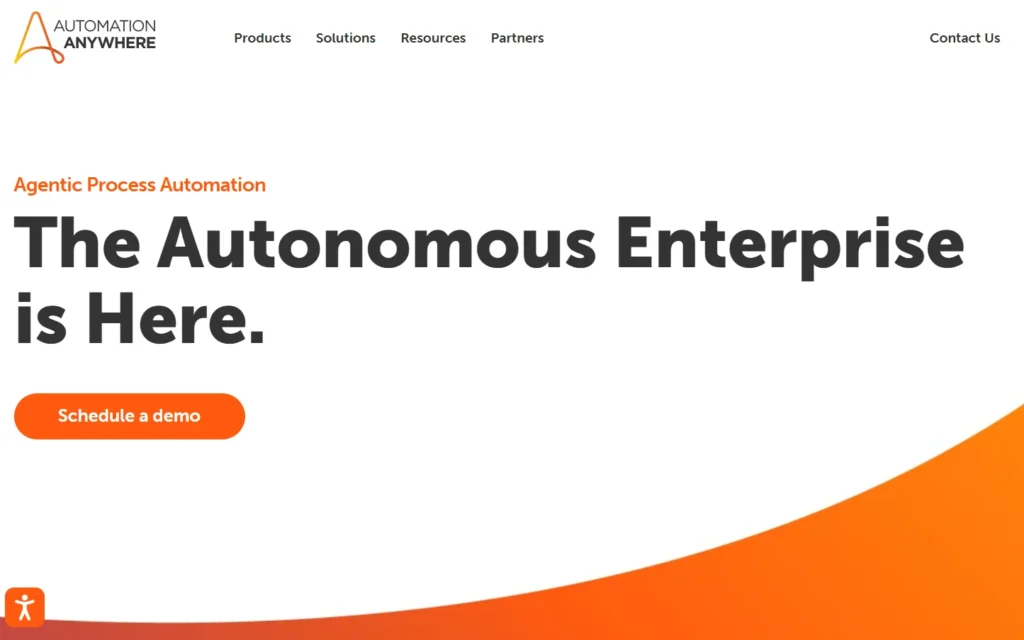
Automation Anywhere represents another major player in the RPA and agentic automation space, emphasizing cloud-native architecture and cognitive bots. This innovative AI workflow automation platform features IQ Bots for handling unstructured data and includes generative AI agents for tasks like automated chatbots. Furthermore, the platform offers extensive process discovery capabilities through its Auto-Discovery Bot and comprehensive analytics via Bot Insights. AI workflow automation tools are many, but this one is truly unique.
Key Features
- Cloud-native RPA architecture with cognitive IQ Bots for unstructured data processing
- Visual Bot Studio with drag-and-drop automation builder interface
- Online Bot Store featuring pre-built automations for common business processes
- Generative AI agents for contact center automation and customer service
- Process discovery tools and comprehensive analytics through Bot Insights
Ratings
Automation Anywhere maintains a solid G2 rating of 4.5/5 based on 5,516 user reviews. Additionally, users consistently praise the platform’s ease of use and powerful AI-enhanced automation capabilities.
Pricing
The platform follows an enterprise pricing model with quotes provided by vendors based on specific requirements. Moreover, capacity-based pricing typically considers the number of bots and user seats required.
Also Read: Best AI Tools for Content Creators in 2025
8. monday.com
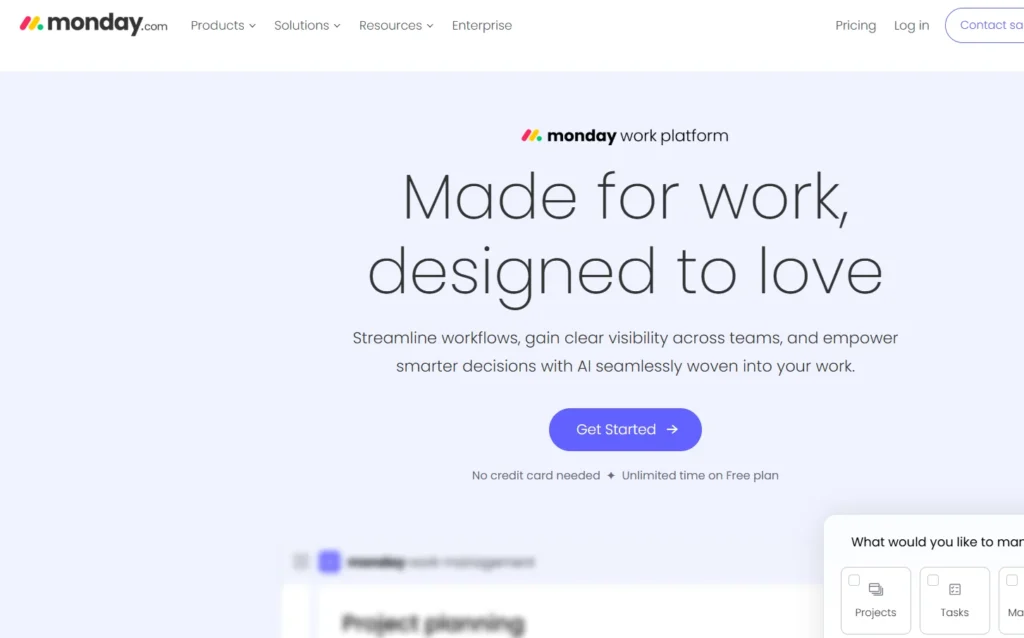
monday.com operates as a comprehensive “Work OS” platform featuring built-in automation capabilities and innovative AI features designed for modern teams. This versatile solution combines project management with process automation through visual boards and task automation recipes. Additionally, the platform incorporates “AI Blocks” – generative AI building blocks that leverage the OpenAI API for text summarization, translation, and sentiment analysis of team updates. A top choice for teams among the list of best AI workflow automation tools.
Key Features
- Visual boards with customizable workflows and project management capabilities
- Task automation recipes that create actions, move items, and notify team members
- AI Blocks powered by OpenAI for text summarization and sentiment analysis
- Native integrations with popular platforms, including Slack and Salesforce
- Comprehensive automation builder designed for marketing campaigns and content approval flows
Ratings
monday.com achieves an excellent G2 rating of 4.7/5 from users who appreciate its flexibility. Furthermore, reviewers consistently highlight the platform’s ease of use and adaptability across different business functions.
Pricing
The platform offers a free plan supporting up to 2 seats with limited automations available. However, the Standard plan begins at $9 per seat monthly when billed annually with enhanced features.
9. Tray.ai
Tray.ai positions itself as a composable integration and automation platform specifically focused on AI-driven workflows and enterprise scalability. This sophisticated AI workflow automation solution combines traditional iPaaS capabilities with an innovative AI agent framework called “Merlin.” Moreover, the platform emphasizes “AI-ready” automation at scale, making it ideal for organizations handling high-change environments and complex integration requirements.
Key Features
- Composable integration platform with visual workflow builder and advanced logic capabilities
- AI Agent Builder called “Merlin” for creating goal-driven autonomous bots
- 500+ pre-built connectors supporting major business applications and AI services
- Modular usage-based pricing model that scales with organizational growth
- Enterprise-grade platform designed for high-change environments and complex integrations
Ratings
Tray.ai maintains a strong G2 rating of 4.5/5 among other AI workflow automation tools based on 156 detailed user reviews. Additionally, users consistently cite its robust AI capabilities as a standout feature in the integration space.
Pricing
The platform utilizes modular usage-based pricing with Pro, Team, and Enterprise plans available. Furthermore, pricing scales are based on tasks executed and workspaces required for different organizational needs.
10. Lindy.ai
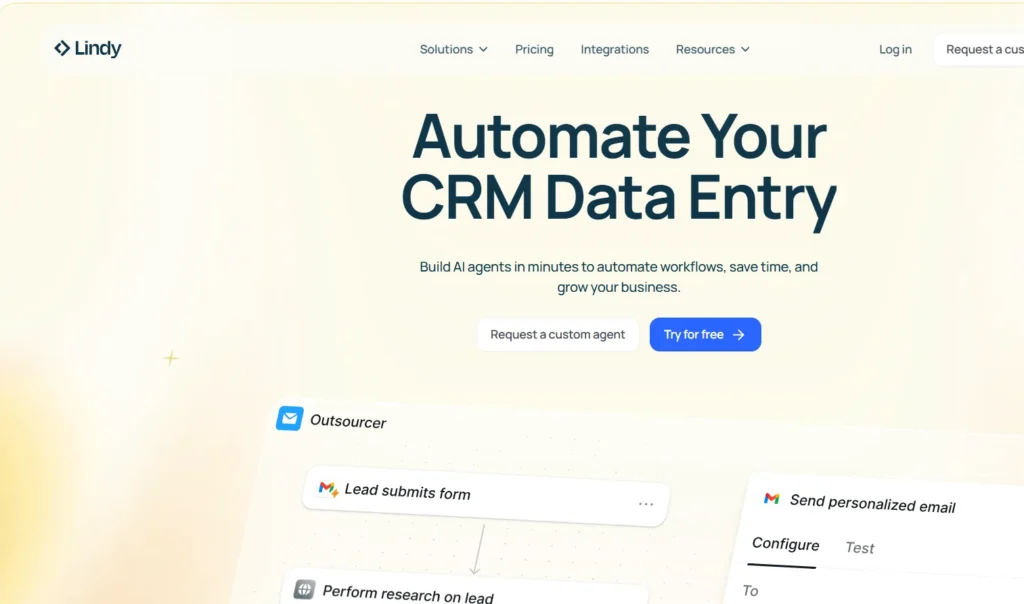
Lindy.ai represents a newer generation of no-code platforms specifically designed for building custom AI-powered agents that automate complex business tasks. This innovative solution allows users to create AI assistants called “Lindies” that handle email management, scheduling, CRM updates, and research activities autonomously. Additionally, the platform features “Agent Swarms” that can run multiple tasks in parallel, revolutionizing how teams approach simple task automation and AI automation.
Key Features
- Custom AI agent builder for creating autonomous “Lindies” that handle various business tasks
- Agent Swarms capability for running multiple automated tasks in parallel processing
- 200+ app integrations through Pipedream, including popular platforms like Gmail and HubSpot
- Templated workflows for common use cases like lead enrichment and inbox management
- Advanced AI-powered processes for lead research, email drafting, and CRM data management
Ratings
Lindy.ai achieves an outstanding G2 rating of 4.9/5, competing with other top AI workflow automation tools based on 34 user reviews. Moreover, reviewers consistently note the platform’s exceptional ease of use for building AI-powered automations without coding knowledge.
Pricing
The platform follows a freemium model with 400 credits monthly in the free plan. However, paid tiers include Pro at $49.99/month and Business at $299.99/month with significantly higher credit allowances.
How Businesses are Benefiting from AI Workflow Automation Tools
The adoption of AI workflow automation tools has fundamentally transformed how modern businesses operate across various industries. Organizations worldwide are discovering that these powerful solutions not only streamline repetitive tasks but also unlock new levels of productivity and innovation. Moreover, companies implementing these technologies report significant improvements in operational efficiency, cost reduction, and employee satisfaction.
Enhanced Productivity and Time Savings
One of the most immediate benefits businesses experience with AI workflow automation tools is the dramatic reduction in time spent on manual, repetitive tasks. For instance, marketing teams that previously spent hours manually transferring leads between systems now accomplish the same work in minutes through automated workflows.
Additionally, sales representatives can focus on building relationships rather than data entry, as AI-powered processes handle routine CRM updates automatically. Customer service teams, in particular, benefit from AI-driven ticket routing and response generation, allowing human agents to focus on complex issues that require personal attention.
Cost Reduction and Resource Optimization
Companies leveraging AI workflow automation tools consistently report substantial cost savings across multiple business functions. By automating routine processes, organizations reduce the need for additional staff while simultaneously minimizing human error that can lead to costly mistakes.
Furthermore, the scalability of AI workflow automation tools means businesses can handle increased workloads without proportionally increasing operational expenses.
Improved Accuracy and Consistency
Human error in data entry and process execution can cost businesses thousands of dollars annually. However, AI workflow automation tools provide consistent, error-free execution of business processes. For example, automated invoice processing eliminates calculation errors and ensures proper routing for approval workflows every time.
Moreover, these systems maintain detailed audit trails and logging capabilities, making it easier for businesses to track process performance and identify areas for further optimization.
Better Customer Experience and Satisfaction
Businesses implementing AI workflow automation tools report significant improvements in customer satisfaction scores and retention rates. Automated response systems ensure customers receive immediate acknowledgment of their inquiries, while intelligent routing directs requests to the most qualified team members.
Businesses can now provide 24/7 support through AI-powered chatbots and automated workflows that handle common customer requests outside of business hours. This level of responsiveness was previously impossible without significant staffing investments.
Data-Driven Decision Making
AI workflow automation tools generate valuable insights through comprehensive analytics and reporting capabilities. Businesses can now track process performance, identify bottlenecks, and make data-driven decisions about resource allocation and process improvements.
Additionally, these platforms often include predictive analytics features that help businesses anticipate future trends and prepare accordingly. For instance, automated lead scoring can help sales teams prioritize prospects most likely to convert.
Conclusion
The landscape of business automation has been revolutionized by sophisticated AI workflow automation tools that cater to organizations of every size and industry. From Zapier’s extensive app ecosystem to UiPath’s advanced robotic process automation capabilities, these AI workflow automation tools demonstrate incredible potential for businesses to transform their operations.
As we move forward into 2025 and beyond, investing in AI workflow automation tools is no longer a luxury but a necessity for businesses serious about maintaining competitiveness. The platforms featured in this overview represent proven solutions that have helped thousands of businesses achieve their automation goals.
FAQs
What is the best AI workflow automation tool?
The best tool depends on your specific needs, but Zapier leads for beginners with its extensive app library, while UiPath excels for enterprise-level robotic process automation. Additionally, Make offers excellent value for teams requiring advanced data transformations and visual workflow building.
Which AI is best for automation?
OpenAI’s ChatGPT and Anthropic’s Claude are the most popular AI models for automation, integrated across platforms like Zapier, Make, and n8n. Moreover, these AI models excel at text generation, data analysis, and decision-making within automated workflows.
How to automate workflow using AI?
Start by identifying repetitive tasks, then choose a no-code platform like Zapier or Make to connect your apps. Furthermore, add AI-powered steps for content generation, data analysis, or intelligent routing to create smart, automated workflows that adapt to different scenarios.
Which are the most powerful AI tools?
UiPath and Automation Anywhere lead in enterprise RPA capabilities, while Workato excels in cross-departmental integrations. Additionally, newer platforms like Lindy.ai and Tray.ai offer cutting-edge AI agent capabilities for building autonomous business assistants.
3 thoughts on “Top 10 AI Workflow Automation Tools in 2025”